


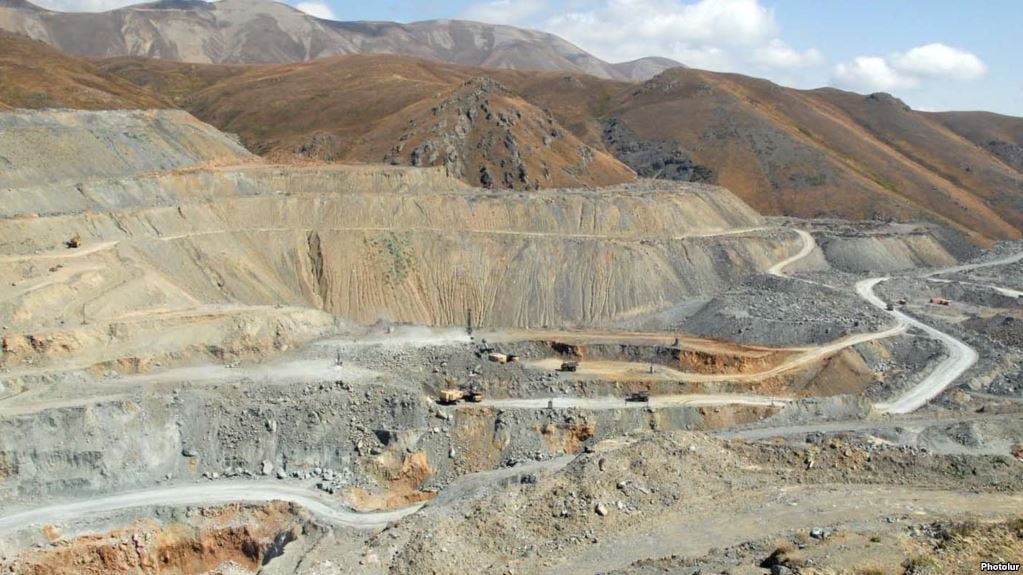
The reconstruction of the liberated territories of Karabakh and Eastern Zangezur is not limited to rebuilding destroyed cities and villages or constructing roads and communications infrastructure. The region’s mineral resources are also becoming an important component of Azerbaijan’s new economic development agenda. Plans envisage exploring deposits of gold, copper, molybdenum, polymetals, alunite and other minerals using modern technologies, assessing their reserves more accurately, and gradually bringing them into industrial production.
However, any discussion of the region’s mineral resources should also take into account the environmental and economic losses it suffered during nearly 30 years of occupation. Azerbaijani state institutions have described the illegal exploitation of natural resources, deforestation, pollution of water resources, and damage to biodiversity and natural ecosystems during that period as “environmental terror” and “ecocide.” According to official information, alongside the exploitation of natural resources during the occupation, serious damage was inflicted on the region’s ecological balance. Commenting on the issue, MP Azer Badamov said:
“Over the years, Armenia and Armenian oligarchs were not content merely with destroying settlements. They also engaged in plundering natural resources belonging to the Azerbaijani people. They illegally extracted mineral resources through mining operations”.
Under such circumstances, bringing mineral resources back into economic circulation also means restoring state control over resources that were previously subject to illegal and uncontrolled exploitation.
At the next stage, particular attention will be paid to the development of gold, copper and molybdenum deposits located in Kalbajar, Aghdara and Zangilan. According to information provided by President Ilham Aliyev at a meeting held on September 22, work has already begun in Aghdara, while the next stage envisages launching operations at existing deposits in Kalbajar and Zangilan.
Important steps have also been taken at the Soyudlu–Zod gold deposit in Kalbajar. In September 2026, drilling and blasting operations began at the deposit for the first time.
Another major project is the Filizchay polymetallic deposit. The possibilities of bringing its copper, zinc and lead reserves into economic circulation are currently being assessed. Under the State Program, the deposit is scheduled to reach full-scale production by the end of 2031.
The potential use of additional copper reserves at the Damirli deposit in Karabakh is also being explored. According to Economy Minister Mikayil Jabbarov, the potential use of approximately 470,000 tons of additional copper reserves is under consideration. At the Zaylik alunite deposits, possibilities are being assessed for developing a raw-material base for the aluminium value chain in the future.
Thus, bringing the mineral resources of Karabakh and Eastern Zangezur back into economic circulation involves several parallel areas of activity: exploration of new deposits, more accurate assessment of existing reserves, resumption of extraction, ore beneficiation, establishment of processing facilities, and creation of a production chain extending all the way to finished products.
The future of Karabakh and Eastern Zangezur is therefore being shaped not only by the reconstruction of cities and villages above ground, but also by bringing underground resources back into economic circulation, developing industrial and production chains, increasing employment, and at the same time addressing the environmental damage accumulated over nearly three decades.