


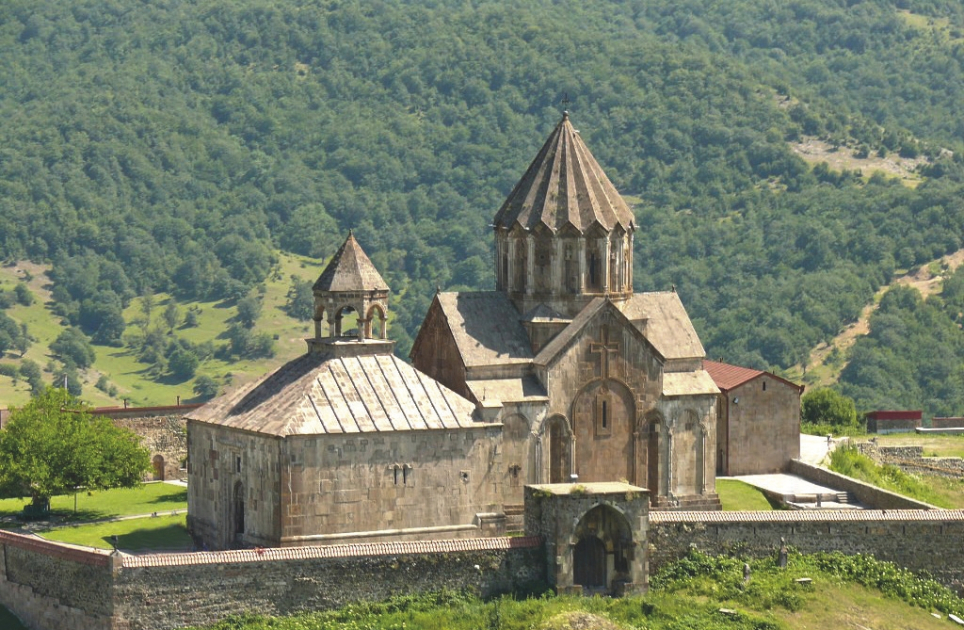
The geography of Western Azerbaijan is distinguished by its rich and multilayered historical and cultural heritage. An important part of this heritage is the Christian culture of Caucasian Albania and the religious and architectural monuments associated with it. The historical and cultural heritage of Caucasian Albania constitutes an important chapter in the history of Azerbaijan. Churches, monasteries, inscriptions, and other material and cultural artifacts attributed to Albanian Christianity are valuable sources for studying the religious and cultural processes that existed in this region in ancient times. Traces of this heritage can also be found in Western Azerbaijan. Qipchagavank, Gulavank, Goshavank, and other religious and architectural monuments occupy a special place in research into Albanian heritage. The architecture, stone inscriptions, and other features of these monuments are of great significance for studying their historical origins. Let us hear from historian Faig Ismayilov on the subject: “Albanian heritage is regarded as a legacy passed down to us from our ancestors. In other words, this heritage is a spiritual value that defines our national identity. Armenians were destroying Albanian cultural heritage in these territories in order to erase our national identity from these lands. For example, it was impossible to encounter an Azerbaijani place name in any of these areas, whether in Karabakh and Eastern Zangezur or in the territories of Western Azerbaijan”. Another important aspect of the issue of Albanian heritage in Western Azerbaijan is the subsequent historical fate of these monuments. Azerbaijani historiography states that after the Albanian Apostolic Church was abolished by a decision of the Russian Empire in 1836 and placed under the jurisdiction of the Armenian Apostolic Church, the process of appropriation and Armenianization of Albanian religious heritage intensified. From this perspective, preserving the Albanian heritage of Western Azerbaijan is not merely a matter of maintaining the physical condition of ancient structures. The inscriptions, architectural features, archaeological materials, and historical context of these monuments must also be preserved and documented. It is also particularly important that issues concerning the Albanian heritage of Western Azerbaijan be studied within the international academic community. Today, the Albanian heritage of Western Azerbaijan remains significant not only as a legacy of the past but also for the study of the historical and cultural memory of the Azerbaijani people. Documenting, preserving, and bringing this heritage into academic circulation are essential to enabling future generations to gain a more comprehensive understanding of the history of the region.
The historical and cultural heritage of Caucasian Albania constitutes an important chapter in the history of Azerbaijan. Churches, monasteries, inscriptions, and other material and cultural artifacts attributed to Albanian Christianity are valuable sources for studying the religious and cultural processes that existed in this region in ancient times.
Traces of this heritage can also be found in Western Azerbaijan. Qipchagavank, Gulavank, Goshavank, and other religious and architectural monuments occupy a special place in research into Albanian heritage. The architecture, stone inscriptions, and other features of these monuments are of great significance for studying their historical origins. Let us hear from historian Faig Ismayilov on the subject:
“Albanian heritage is regarded as a legacy passed down to us from our ancestors. In other words, this heritage is a spiritual value that defines our national identity. Armenians were destroying Albanian cultural heritage in these territories in order to erase our national identity from these lands. For example, it was impossible to encounter an Azerbaijani place name in any of these areas, whether in Karabakh and Eastern Zangezur or in the territories of Western Azerbaijan”.
Another important aspect of the issue of Albanian heritage in Western Azerbaijan is the subsequent historical fate of these monuments. Azerbaijani historiography states that after the Albanian Apostolic Church was abolished by a decision of the Russian Empire in 1836 and placed under the jurisdiction of the Armenian Apostolic Church, the process of appropriation and Armenianization of Albanian religious heritage intensified.
From this perspective, preserving the Albanian heritage of Western Azerbaijan is not merely a matter of maintaining the physical condition of ancient structures. The inscriptions, architectural features, archaeological materials, and historical context of these monuments must also be preserved and documented.
It is also particularly important that issues concerning the Albanian heritage of Western Azerbaijan be studied within the international academic community.
Today, the Albanian heritage of Western Azerbaijan remains significant not only as a legacy of the past but also for the study of the historical and cultural memory of the Azerbaijani people. Documenting, preserving, and bringing this heritage into academic circulation are essential to enabling future generations to gain a more comprehensive understanding of the history of the region.