


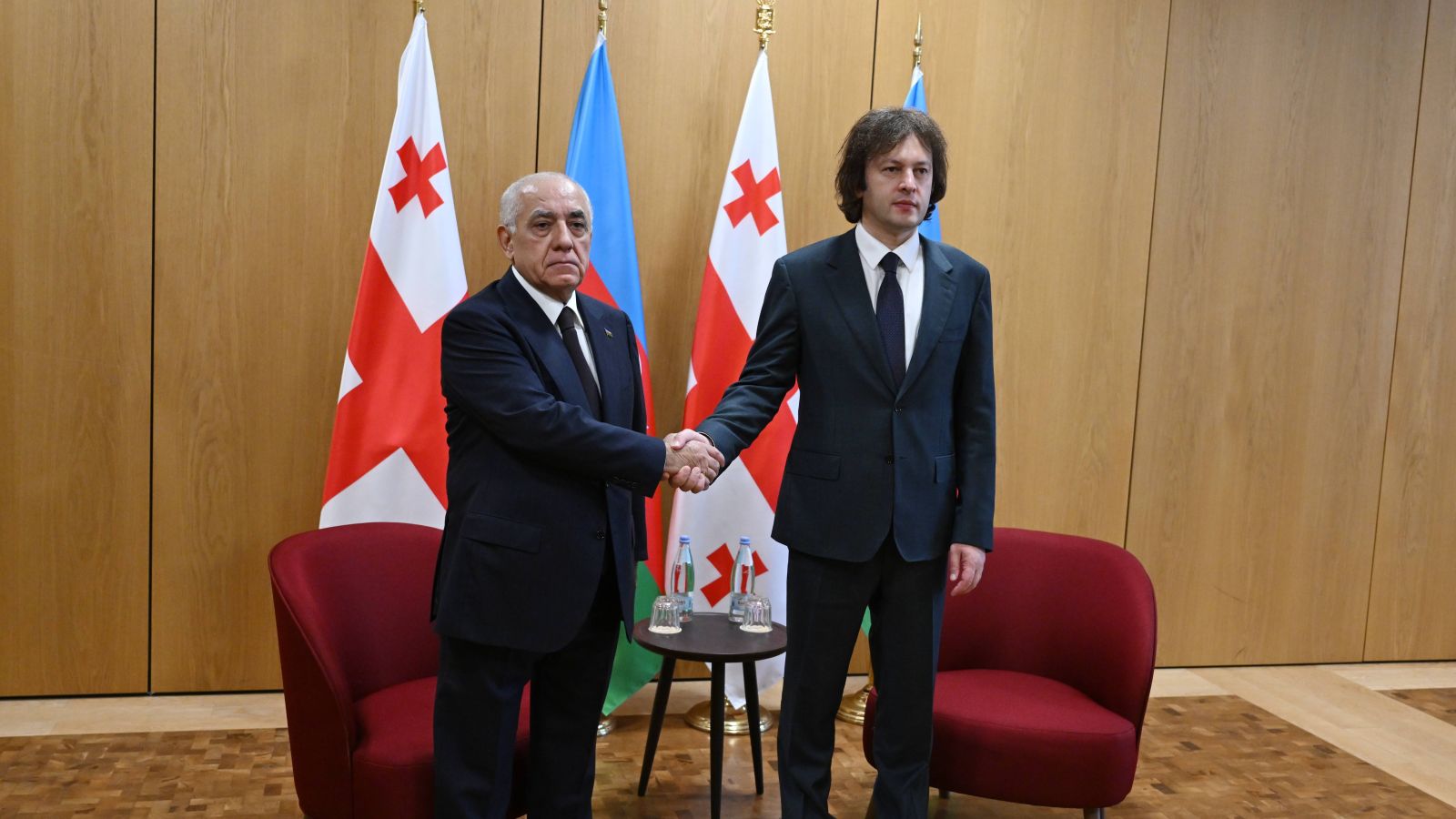
The development of relations with neighboring Georgia is one of the key priorities of Azerbaijan’s foreign policy. Based on historical friendship and mutual trust, these ties today encompass a broad range of areas, from political dialogue to economic cooperation, energy, transport and regional security. Prime Minister Ali Asadov’s working visit to Georgia on October 29–30 and his meetings there are particularly noteworthy in terms of identifying new avenues for bilateral cooperation.
As part of the visit, a one-on-one meeting between the Prime Ministers of Azerbaijan and Georgia, Ali Asadov and Irakli Kobakhidze, was held in the Georgian city of Sighnaghi on October 30. The sides discussed the current state of their strategic partnership, pressing issues on the bilateral agenda and prospects for future cooperation.
One of the key highlights of the visit was the 11th meeting of the Intergovernmental Commission on Economic Cooperation. Discussions focused on expanding ties in the fields of economy, trade, investment, energy, transport, transit, agriculture and humanitarian affairs.
Figures also confirm the dynamic development of cooperation. According to Ali Asadov, trade turnover between the two countries increased by 42 percent in the first nine months of 2026, approaching one billion US dollars. Azerbaijan’s investments in the Georgian economy amount to approximately four billion dollars. These figures confirm Georgia’s position as one of Azerbaijan’s important economic partners in the region.
Energy cooperation is one of the strategic pillars of bilateral relations. The Baku–Tbilisi–Ceyhan oil pipeline and the Southern Gas Corridor serve not only the economic interests of the two countries but also Europe’s energy security. Meanwhile, cooperation in the field of green energy and the development of a green energy corridor to Europe are opening up new opportunities.
Transport and logistics are also of particular importance. Speaking on this issue, Prime Minister Ali Asadov said:
“Cooperation in the transport and transit sector is one of the most important areas of our partnership. Our countries continue their joint efforts to develop the Middle Corridor. The full-scale operation of the Baku–Tbilisi–Kars railway, a vital component of the Middle Corridor, and the increase in its freight capacity to five million tonnes are clear examples of our successful cooperation”.
Thus, cooperation between the two countries is taking on a broader dimension beyond traditional friendly relations, contributing to stronger economic integration, energy security and transport connectivity in the South Caucasus.