


The reconstruction of the territories liberated from occupation is one of the greatest strategic tasks facing Azerbaijan. This process is not limited to rebuilding destroyed cities and villages or restoring roads and communications. Establishing a new life in Karabakh and Eastern Zangazur, ensuring the return of people to their native lands, and fully reintegrating these territories into the country’s economic system are all integral parts of a unified, long-term strategy.
One of the key directions of this strategy is the Great Return. Its objective is to ensure that people who have been separated from their native lands for decades can return to their homes in safety and with dignified living conditions, while simultaneously transforming the liberated territories into modern and sustainable centers of development.
Today, a large-scale reconstruction process is underway in Karabakh and Eastern Zangazur. New settlements are being established, cities are being rebuilt, roads and railways are being constructed, and energy, water, communications and other infrastructure are being developed. Schools, hospitals, and social and public facilities are being commissioned. At the same time, new opportunities are being created in industry, agriculture, tourism, services and other sectors to unlock the region’s economic potential.
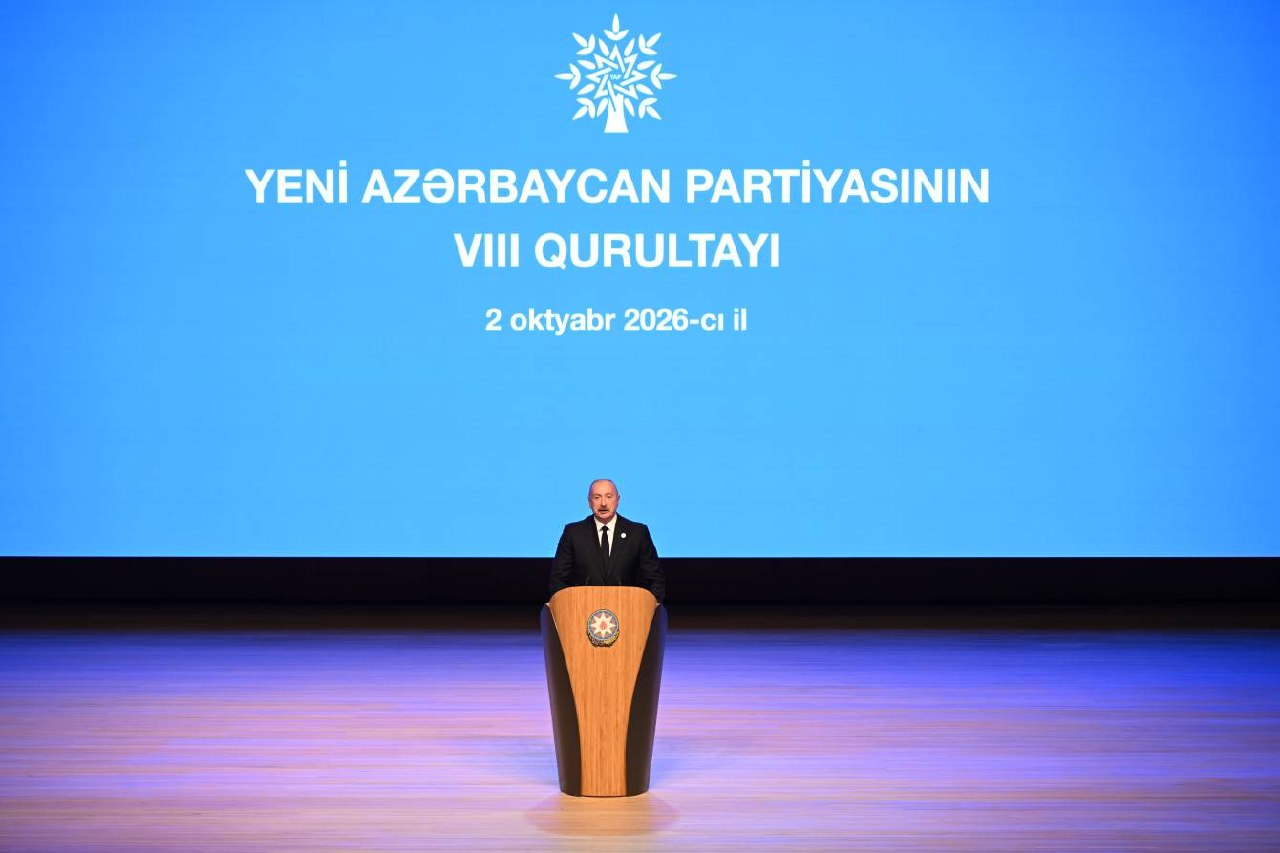
At the 8th Congress of the New Azerbaijan Party, President of the Republic of Azerbaijan Ilham Aliyev particularly emphasized the reconstruction of Karabakh and Eastern Zangazur as one of the country’s main strategic priorities. According to the head of state, 96,000 people are already living, working and studying in these territories. To date, 28 billion manats have been allocated for the development of Karabakh and Eastern Zangazur, while the resettlement of former internally displaced persons has been ensured in 48 settlements. The President noted that the Great Return process would be accelerated further in the coming years.
Thus, the Great Return is no longer simply a process of returning people to individual settlements; it has evolved into a project aimed at reshaping an entire region.
The primary goal is not merely to enable people to return to their homes. Conditions must also be created for returnees to live, work, study and establish businesses in these areas. That is why, at the next stage of the reconstruction process, particular importance will be attached to increasing employment, developing entrepreneurship, attracting investment and creating new areas of economic activity.
Karabakh and Eastern Zangazur have considerable economic potential in this regard. Mineral deposits, agricultural opportunities, tourism potential, energy resources and a favorable geographical location can serve as key pillars of the region’s future economic development. The industrial and manufacturing enterprises being established there not only stimulate local economic activity but also contribute to the creation of new jobs and the sustainable settlement of the population.
As President Ilham Aliyev’s speech at the congress demonstrates, the reconstruction of Karabakh and Eastern Zangazur is not merely a component of Azerbaijan’s social policy; it is an important pillar of the country’s overall development strategy.
In this sense, the essence of the Great Return is not simply to restore the past. It is about building the future in Karabakh and Eastern Zangazur.