


The path Azerbaijan has taken in recent years cannot be measured solely by political and economic indicators. It is also characterized by the country’s transformation into a state that makes its own decisions, independently safeguards its national interests, and continues to strengthen its position in the system of international relations.
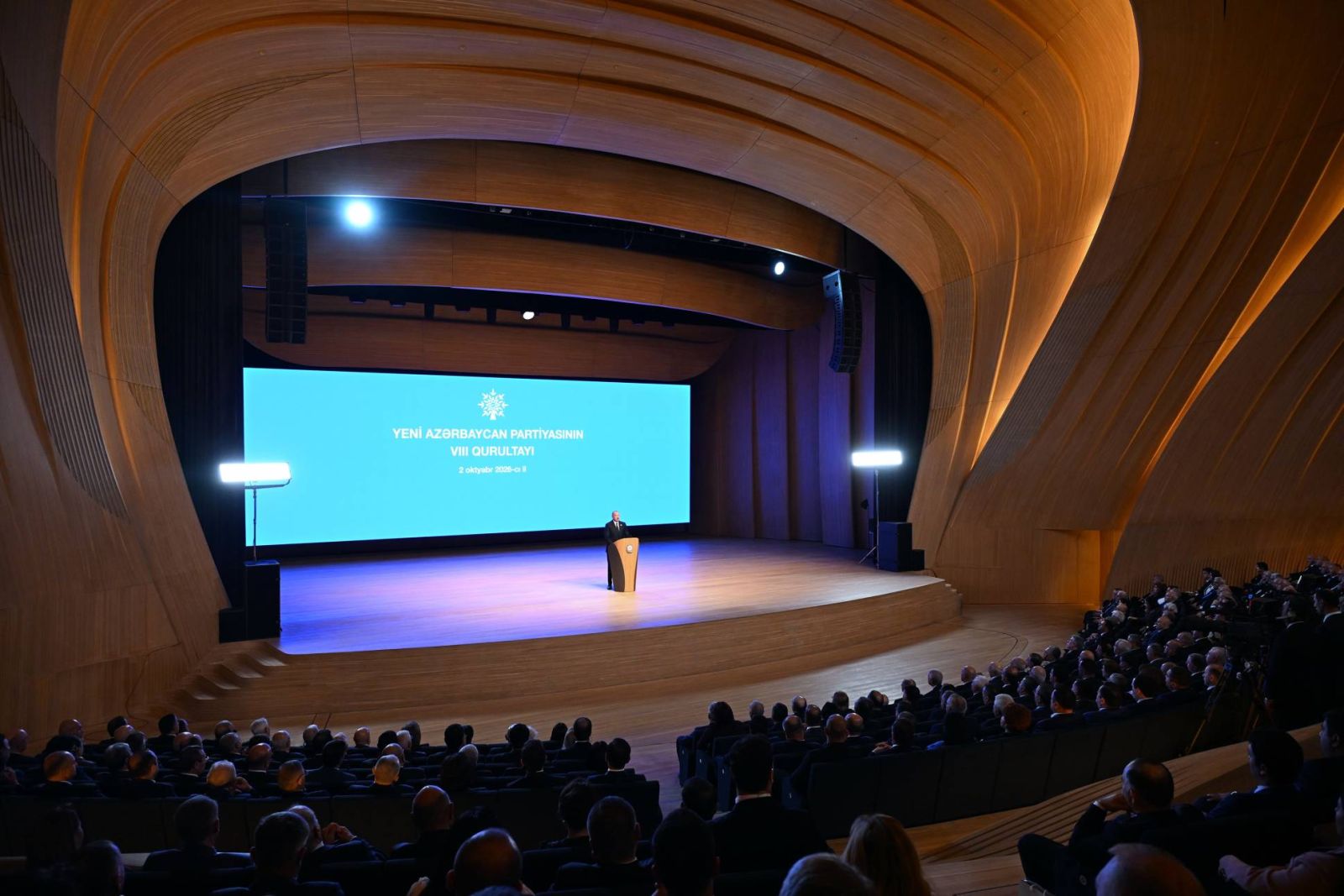
In his address at the 8th Congress of the New Azerbaijan Party, President Ilham Aliyev once again outlined the main pillars of Azerbaijan’s state policy: independence, statehood, economic independence, strong military capabilities, and the maximum utilization of national resources. According to the President, this policy has been pursued since 2003 and will continue to be pursued in the future.
The results of this policy are reflected in Azerbaijan’s regional and international standing. The full restoration of territorial integrity and sovereignty not only changed the country’s geopolitical realities, but also demonstrated Azerbaijan’s ability to assert its own will. As the President emphasized in his address to the Congress, Azerbaijan both put an end to the occupation and created new realities in the region. The acceptance of these realities at the international level is presented as one of the key indicators of the country’s growing political weight.
Today, the people of Azerbaijan live in conditions of security and stability.
In his address, President Ilham Aliyev said:
“Today, the people of Azerbaijan live in conditions of security, peace and stability. This can be considered a great asset in today’s world. Because if we look at the world map today, we will see that very few peoples and countries live in conditions of stability, security and peace to the same extent as the Azerbaijani people. These are our realities. Therefore, security measures must always remain on the agenda. There are no risks inside the country — neither physical risks, nor ideological risks, nor any other risks. All risks are emerging beyond our borders. As Azerbaijan grows stronger and pursues a more active, open and independent policy, and as we send back ten arrows for every arrow aimed at us, the pressure against us will increase even further. Look, today we do not leave a single blow directed against us unanswered. For one blow, we may return two, five or ten blows so that everyone stays in their place, does not interfere in our affairs, does not meddle in our way of life, and does not tell us what to do. Let everyone go and take care of their own people and their own state.”
Today, Azerbaijan is not merely a participant in regional processes, but also one of the states influencing and shaping those processes. The President’s address at the 8th Congress of the New Azerbaijan Party once again articulated the underlying philosophy of this policy: an Azerbaijan that determines its own destiny, places its national interests at the forefront, and preserves its independent position amid the changing international order.
Commenting on the issue, Member of Parliament Tural Ganjaliyev said:
“Azerbaijan today plays a very important role in shaping both the regional and global agenda. What the President emphasized has once again been confirmed: Azerbaijan has today become a middle-power state. Naturally, this requires an independent foreign policy and an independent decision-making mechanism. In other words, our partners and counterparts also understand that Azerbaijan is not a country that simply follows someone else’s instructions.”
Economic independence also plays a special role in strengthening Azerbaijan’s political weight. Expanding economic capabilities increases the state’s room for maneuver in the face of external influences and creates a broader resource base for implementing national priorities. President Ilham Aliyev also stated in his address to the Congress that Azerbaijan had fully ensured its economic independence and had become a valuable member of the international community.
The concept of a strong state, however, is not limited to economic indicators. The development of Azerbaijan’s military capabilities is also presented as one of the key priorities of state policy.
Thus, Azerbaijan’s transformation into a center of power cannot be explained solely by the advantages of its geographical location. Political will, economic independence, military capabilities, energy and transportation potential, as well as multifaceted relations established with various partners, all complement one another in shaping the country’s growing influence.