


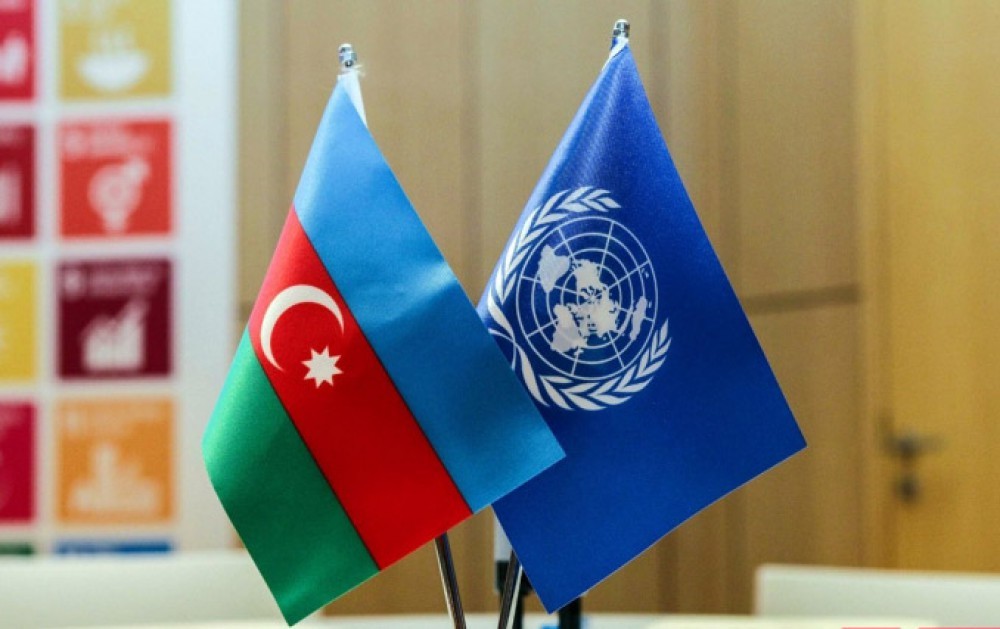
In recent years, the issue of the return of Western Azerbaijanis has been presented not only in the context of historical memory and the political agenda, but also from the perspective of international law and human rights. It is therefore no coincidence that this issue was placed at the center of an international conference held at the United Nations Headquarters in New York.
At the heart of the issue lies one fundamental question: through what mechanisms can the right of people who were forcibly displaced from their native places to return to those areas in a safe, voluntary, and dignified manner be ensured?
This question requires the issue of Western Azerbaijanis to be viewed as more than simply a reminder of events that took place in the past. Forced displacement is not merely the loss of a place of residence. It also means the severing of the historical, cultural, and social ties between people and the places where they were born.
Examples of heritage associated with the historical presence of Western Azerbaijanis in Yerevan and various regions of present-day Armenia are also an important part of this discussion. Mosques, cemeteries, settlements, historical toponyms, and other tangible cultural heritage sites bear traces of the social and cultural life that once developed in those areas. Therefore, the issue of return cannot be considered separately from the preservation of cultural heritage.
At the same time, raising the right of return within the framework of international law brings its practical aspects to the forefront. If the issue concerns actual return, political will alone is not sufficient. Numerous legal and institutional issues must be addressed, including security, the prohibition of discrimination, recognition of housing and property rights, documentation, the resolution of property-related matters, and access to religious and cultural heritage.
Elgun Hajiyev, Head of the Communications and Data Analytics Department at the Baku Initiative Group, said:
“This conference is the first event held within the UN framework at which the issue of the ethnic cleansing of Western Azerbaijanis by Armenia has been discussed. I would like to emphasize that the issue of the return of Western Azerbaijanis to their homes and native places should be placed on the agenda of international organizations. States and international organizations should not limit themselves to statements alone. They should also develop international mechanisms that envisage both legal and practical measures.”
The adoption, at the conclusion of the conference, of a joint appeal addressed to UN Special Rapporteurs is another noteworthy development in this regard. Alongside promoting safe, voluntary, and dignified return, the document also highlights the need to establish guarantees for the preservation of Azerbaijan’s historical, religious, and cultural heritage in the territory of Armenia.
The discussion of the return of Western Azerbaijanis on international law and human rights platforms can be viewed as one of the factors indicating that the issue has entered a new phase.