.png)


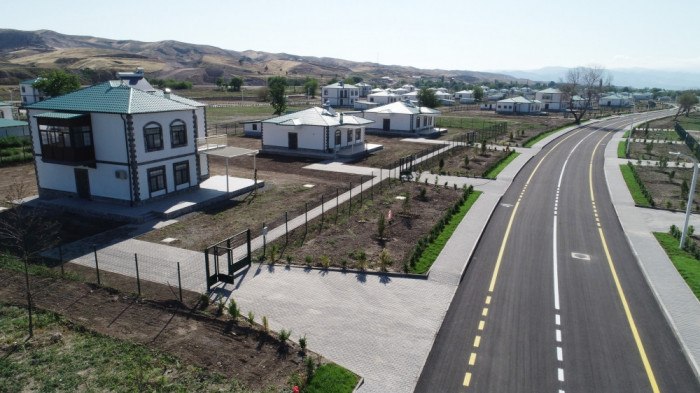
The large-scale restoration and reconstruction efforts currently underway in the liberated territories are among Azerbaijan’s most important priorities. As a result of nearly three decades of occupation, not only settlements in Karabakh and Eastern Zangazur, but also examples of historical and cultural heritage suffered extensive destruction. Hundreds of historical and religious monuments in these lands were destroyed, desecrated, or lost their original appearance.
Today, alongside the restoration of these monuments, significant efforts are being made to restore the historical character of the territories. Mosques, mausoleums, historic buildings, and other cultural heritage sites are being restored. This process is important not only for rebuilding stone and walls, but also for preserving the historical memory of the Azerbaijani people.
Alongside the restoration of historical heritage, modern and sustainable infrastructure is being developed to establish a new life in Karabakh. The return of people to their ancestral lands is not limited to the construction of residential buildings. Roads, electricity, gas and water networks, schools, healthcare facilities, and social and public infrastructure are also being built to ensure a comfortable and safe life.
The development of new residential neighborhoods, the construction of cities and villages based on modern planning principles, the restoration of transport links, and the construction of new roads are laying the foundation for the region’s future development. Speaking on the issue, Member of Parliament Rizvan Nabiyev said:
“The road infrastructure projects implemented by Azerbaijan in a short period of time, the construction of residential buildings, numerous schools, and other infrastructure projects are all important. Another important point is that we are not only building new settlements; at the same time, we are also restoring our historical and religious monuments.”
Thus, on the one hand, destroyed monuments are being restored to their original appearance, while on the other, modern cities, villages, and new residential areas are being built.
Today, some of the former internally displaced persons have already returned to their ancestral lands and are building new lives there. Every home built, every road constructed, and every monument restored represents a separate yet interconnected chapter of this return.
With the Great Return, life is once again coming back to Karabakh. The traces of the past are being preserved, new living spaces are emerging where destruction once stood, and the lands we longed for over many years are being rebuilt with an eye toward the future.