.png)


Every stone is a fingerprint left behind on the surface of time.
A human life is but a fleeting guest before time. Stone, however, is a traveler that journeys through the centuries. People see and forget; stone sees and remembers. That is why, when we look at ancient monuments, we do not see mere stones. We see time itself. Every crack bears the trace of an event, every sign of erosion carries the breath of a century, and every inscription is a voice echoing from the past. There is no history in stone… Stone itself is history.
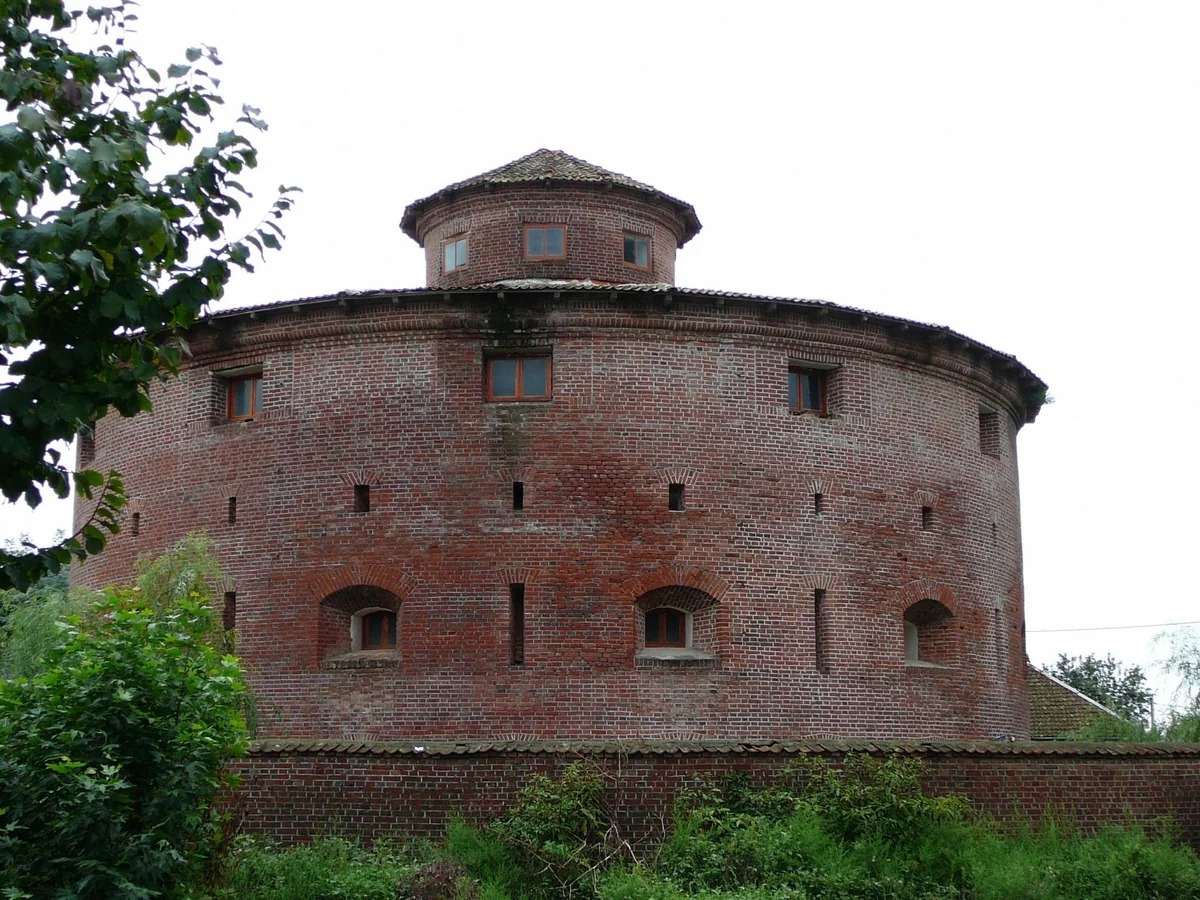
On the ancient land of Lankaran, rising between the humid breath of the Caspian Sea and the grandeur of the Talysh Mountains, the Round Tower is more than an architectural monument. It is the petrified memory of time, a chronicle written silently by the centuries. Standing before this fortress, one does not simply look at stone walls; one looks into the eyes of the past and comes face to face with history. At times, it seems as though the Round Tower was built not from stone, but from the memories of centuries. Every stone carries the breath of an era, every crack bears the trace of an event, and every wall holds the silent story of thousands of human lives. Time has passed over this fortress, the winds have caressed its stones, and the rains have washed its walls, yet none has been able to erase its memory.
According to historical sources, the Round Tower and another fortress structure that was later converted into a lighthouse were considered the main defensive towers of the Lankaran fortress system. Located in two directions of the city, these structures reinforced the fortress walls and served observation and defensive functions against enemy attacks. Some studies suggest that both towers were built in the 18th century on the orders of the powerful ruler Nader Shah. If this assumption is correct, these structures can be regarded as important examples of the military architecture of their time. At that time, the walls extending between the Round Tower and the other defensive tower formed the forward defensive line of Lankaran Fortress. Anyone approaching the city would first have had to face this imposing defensive system.
Following the events of the 19th century, much of Lankaran Fortress was destroyed. The defensive structures that had once complemented one another were separated. The fortress walls disappeared, but the two main towers defied the passage of time and managed to remain standing. In 1869, a lantern was installed atop the northern defensive position, giving the structure a new function. Thus, the ancient defensive tower was transformed into the Lankaran Lighthouse. Once used to watch for the threat of an enemy, the fortress now became a source of light guiding sailors at sea.
Fortifications built in a circular shape were considered more advantageous from a defensive standpoint. This design provided broader opportunities for observation against attacking forces and increased the stability of the walls. Even today, when looking at the fortress, one can appreciate the advanced engineering knowledge possessed by the architects of that era.
Today, the Round Tower is more than just a historical monument. It is a stone chronicle stretching from Lankaran’s past into the present. Once, soldiers stood guard behind its fortress walls. Later, the footsteps of prisoners echoed within those same walls. Today, those stones receive the curious gaze of tourists, researchers, and history enthusiasts. The Round Tower and the Lankaran Lighthouse seem like two old sentinels gazing at one another from afar. Centuries ago, they served the same purpose, protected the same city, and shared the same fate. In them, we see the memory of centuries, the past of Lankaran, and a heritage that has endured the tests of time.